


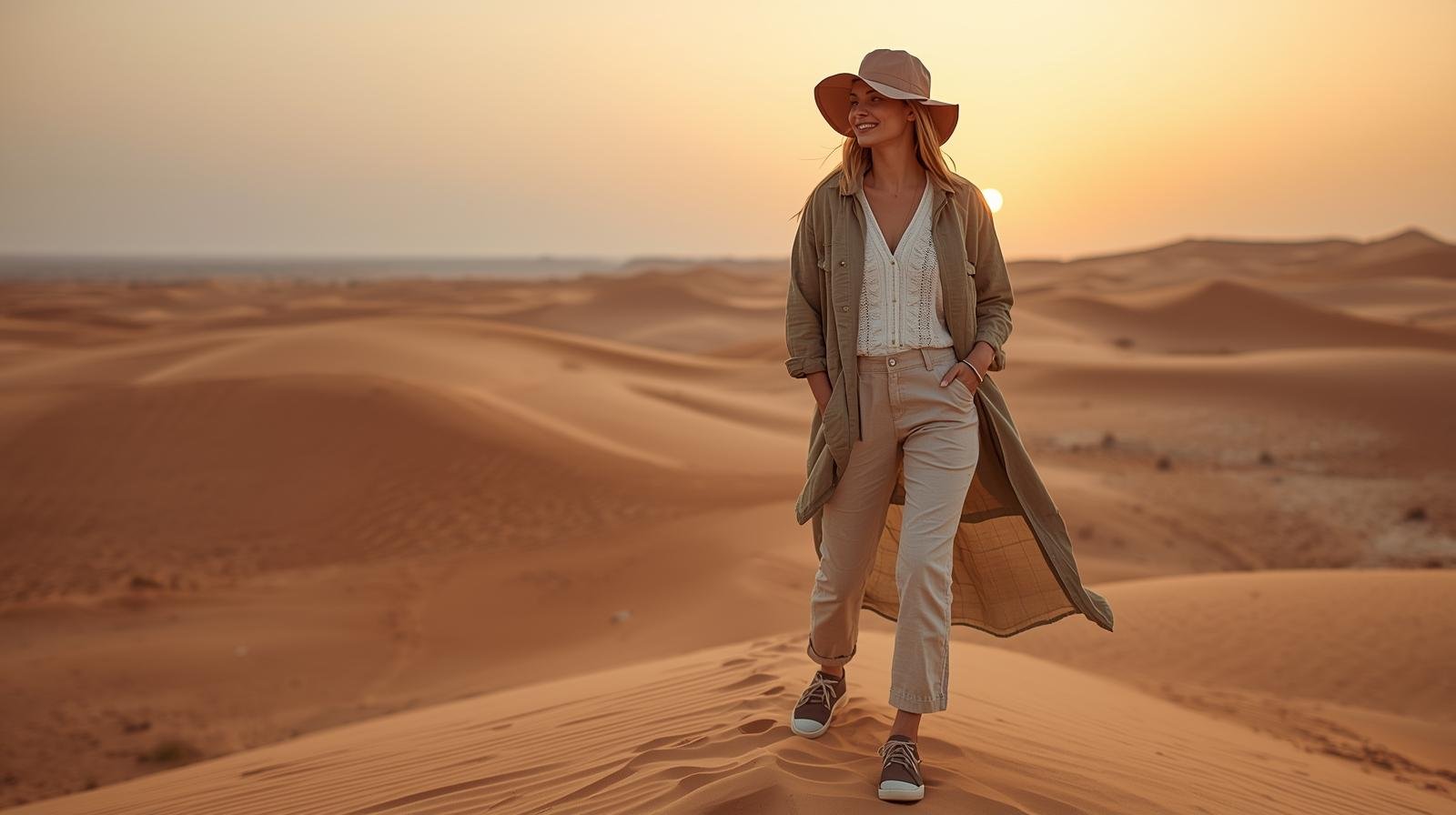
What to wear for a Dubai desert safari comes down to four things: lightweight breathable fabrics like cotton or linen, closed-toe shoes with grip, modest coverage that respects local culture and a light layer for after sunset when the temperature drops fast. Dubai desert swings from around 47°C in peak summer to near-freezing on winter nights and most first-time visitors pack for the wrong half of that range.
This guide covers exactly what to wear by season, by activity, and by traveler type plus a few outfit mistakes that ruin more desert safaris than the heat itself.
What to Wear for Dubai Desert Safari
| Category | Best Choice |
| Fabric | Cotton, linen, moisture-wicking blends |
| Fit | Loose, not tight or fitted |
| Colors | Light neutrals cream, beige, sand, olive |
| Footwear | Closed-toe sneakers or trainers with grip |
| Coverage | Long sleeves/pants or knee-length minimum |
| Evening layer | Light jacket, hoodie or thick scarf |
| Sun protection | Wide-brim hat, UV sunglasses, SPF 50+ |
Why Fabric Choice Matters More Than Style
Cotton and linen are the two best fabric choices for desert conditions and it isn’t close. Both breathe well, absorb sweat efficiently and dry quickly even in intense heat. Loose-fitting cuts create a small layer of airflow between the fabric and skin that gap regulates body temperature far more effectively than anything tight-fitting can.
Synthetic fabrics and heavy denim do the opposite: they trap heat aggressively and stay damp long after sweat starts. Both should stay back at the hotel. When deciding what to wear for a Dubai desert safari, fabric is the first decision that actually matters style choices come after that’s settled. Booking a Desert Safari in advance also helps plan the outfit around the specific activities included, since a dune-bashing-heavy itinerary calls for slightly different practical choices than a camel-ride-and-dinner evening.
Women Outfit Ideas for a Dubai Desert Safari
Maxi dresses, wide-leg linen trousers, flowy tops and tunics all work well in desert heat while staying comfortable for hours of movement. Modesty is genuinely appreciated at most traditional Bedouin-style camps across the UAE and it isn’t just a suggestion very revealing outfits may be politely asked to be covered at some camps.
Light neutral shades cream, beige, sand, olive also photograph beautifully against the dunes, which matters more than it sounds for anyone planning golden-hour photos. A lightweight scarf or pashmina does double duty: sun and sand protection during the day, an extra warm layer once the fire pit comes out at night.
Women interested in a more local look sometimes opt for an abaya for part of the visit long-sleeved, ankle-length and genuinely well-suited to desert heat, not just a cultural nod. Many camps also offer traditional garments on-site specifically for photo opportunities.
After the dunes, many travelers head over to the Dubai Aquarium & Underwater Zoo, where the outfit requirements are entirely different worth keeping in mind when packing for a multi-stop day.
Men Outfit Tips for a Comfortable Safari
Light linen trousers or chinos paired with a breathable cotton shirt are the most practical combination for most of the day. Shorts are accepted at most private camps, but knee-length is the safer, more considerate choice hot sand against bare legs during dune bashing and camel rides causes real irritation, not just a cultural faux pas.
Packing one long-sleeved shirt for the evening portion of the trip is genuinely worth the extra suitcase space. It works as sun protection during golden hour and as warmth once temperatures drop after dark. Sticking to lighter shades white, cream, tan throughout the day keeps heat absorption noticeably lower than darker colors.
For travelers wanting a more traditional option, a kandura is a long-sleeved, ankle-length garment that keeps you cooler than it looks and is widely welcomed at desert camps.
Footwear: The Decision Most People Get Wrong
Flip-flops feel like the obvious desert choice, but they fail within the first hour. Sand fills every gap and slipping on loose dune surfaces becomes a real problem fast especially during dune bashing stops or a walk up a dune for sunset photos.
Closed-toe sneakers or trainers with a bit of tread are the most practical footwear for nearly every desert safari activity. Sandals with a secure back strap work as a reasonable secondary option for flatter terrain and shorter walks. High heels and platform shoes sink into sand almost immediately and create a genuine safety risk on any kind of slope they simply don’t belong on this trip, regardless of how the evening photos might look.
Dressing for Specific Desert Activities
Different parts of a desert safari call for slightly different practical choices and outfit advice that ignores this misses half the point.
| Activity | What Works Best |
| Dune bashing | Closed shoes, secured hair, nothing loose that could snag |
| Camel riding | Long pants (saddle friction protection), closed shoes |
| Sandboarding | Closed shoes, clothing that won’t ride up, sunglasses |
| Quad biking / dune buggy | Closed shoes required, avoid loose scarves near machinery |
| Evening BBQ & shows | Comfortable layers, warmer layer as temperature drops |
Long pants specifically help during camel rides, where saddle friction against bare skin is a common and easily avoidable discomfort. For quad biking or dune buggy add-ons, closed shoes aren’t just recommended they’re typically required by the operator for safety reasons.
Accessories and Sun Protection Are Part of the Outfit
A wide-brimmed hat or a well-fitted cap isn’t optional under direct desert sun it’s one of the highest-impact items in the whole outfit. UV-protective sunglasses shield eyes from both sun glare and the fine sand particles that kick up during dune driving.
A lightweight scarf or shawl covers the neck and shoulders during the hottest part of the day, then becomes a warm extra layer once the campfire starts. SPF 50 or higher sunscreen, reapplied through the day, is genuinely non-negotiable the desert sun is stronger than it feels thanks to the lack of shade and the reflective sand. An insulated water bottle rounds out the essentials, since dehydration sets in faster in dry desert heat than most travelers expect.
Travelers who enjoy outdoor evening experiences at places like Dubai Garden Glow will find these same accessories hat, sunglasses, light scarf come in handy there too.
Desert Safari Outfit by Season
Dubai’s desert climate shifts dramatically between summer and winter and the right outfit shifts with it.
| Season | Daytime Temp | Evening Temp | What to Pack |
| Summer (Jun–Sep) | 40–47°C | 30–35°C | Maximum breathability, SPF 50+, light colors, minimal layering |
| Winter (Nov–Feb) | 22–28°C | 10–15°C | Same daytime basics, plus a proper jacket or thick scarf for evening |
| Shoulder season (Mar–May, Oct) | 28–35°C | 18–24°C | Light layering, a scarf usually covers the evening drop |
Winter evenings in particular catch first-time visitors off guard a desert that felt warm at 4 PM can drop into jacket-weather territory well before the BBQ starts, especially on overnight or extended evening safaris.
Packing for Kids on a Desert Safari
Children are more sensitive to heat and sun exposure than adults, so their desert safari outfit deserves its own attention rather than a scaled-down version of an adult’s. UV-protective shirts and pants, a wide-brim hat and closed shoes matter even more for kids than for adults, since they tend to spend more time playing directly on the sand. Pack an extra change of clothes sand gets everywhere during dune play and reapply sunscreen more frequently than the adult schedule calls for.
What Not to Wear on a Desert Safari
A handful of outfit choices consistently cause problems once the experience begins. Worth knowing before packing:
- Heavy jeans trap heat and become genuinely uncomfortable within the first hour
- Very short shorts or revealing tops are inappropriate at most traditional desert camps
- High heels or platform shoes sink into sand and meaningfully increase the risk of falling
- Dark synthetic fabrics absorb heat fast and stay damp far longer than natural fibers
- Heavy metal jewelry heats up under direct sunlight and causes real discomfort quickly
- Flip-flops fill with sand almost immediately and offer no grip on dune slopes
Travelers planning a post-safari water day should also note that what to wear for a Dubai desert safari and what to pack for Atlantis Aquaventure Waterpark Dubai are two entirely separate packing conversations plan a bag swap rather than trying to make one outfit cover both.
Key Takeaways
- Cotton and linen in loose, light-colored cuts are the best fabric choice for desert heat.
- Closed-toe sneakers beat sandals and flip-flops for every desert activity that involves walking on dunes.
- Modest coverage knee-length minimum, sleeves for sun protection works for both cultural respect and practical comfort.
- Evening temperatures can drop 15–20°C below daytime highs, especially in winter, so a light jacket or scarf is essential, not optional.
- Kids need extra sun protection and a spare outfit, since they typically spend more time in direct contact with the sand.
Frequently Asked Questions
Is there a dress code for a Dubai desert safari?
Most camps encourage modest clothing out of cultural respect. Very revealing outfits may be politely asked to be covered at traditional Bedouin-style camps.
Can shorts be worn on a desert safari?
Yes, shorts are generally accepted at private camps. Knee-length or longer is the most appropriate and comfortable choice, since hot sand against bare legs during dune bashing or camel rides can cause irritation.
What type of shoes work best in the desert?
Closed-toe sneakers with some tread offer the best grip and keep sand out most effectively. They’re far more practical than open sandals or flip-flops, which fail within the first hour on the dunes.
Does the outfit need to change for evening safaris?
Yes. The desert cools quickly after sunset, especially in winter. A light jacket, hoodie, or warm scarf is essential for the evening portion of the trip.
Is wearing traditional Emirati clothing respectful at camps?
Yes, it’s genuinely welcomed. Many camps even offer a kandura or abaya specifically for photo opportunities on-site.
What should I wear for a Dubai desert safari in summer versus winter?
Summer calls for maximum breathability and strong sun protection throughout the visit. Winter evenings get cold enough that a proper jacket or thick scarf becomes necessary, even though daytime temperatures still feel warm.
Do I need closed shoes for quad biking or dune buggy rides?
Yes. Closed-toe shoes are typically required by tour operators for quad biking and dune buggy activities for safety reasons, not just recommended.
Ready for the Dunes?
The right outfit turns a Dubai desert safari from an endurance test into one of the most memorable parts of the trip light, breathable layers by day, one warm layer for after sunset and shoes built for sand rather than style alone. Once the outfit is sorted, the only thing left is booking the experience itself and letting the dunes do the rest.