


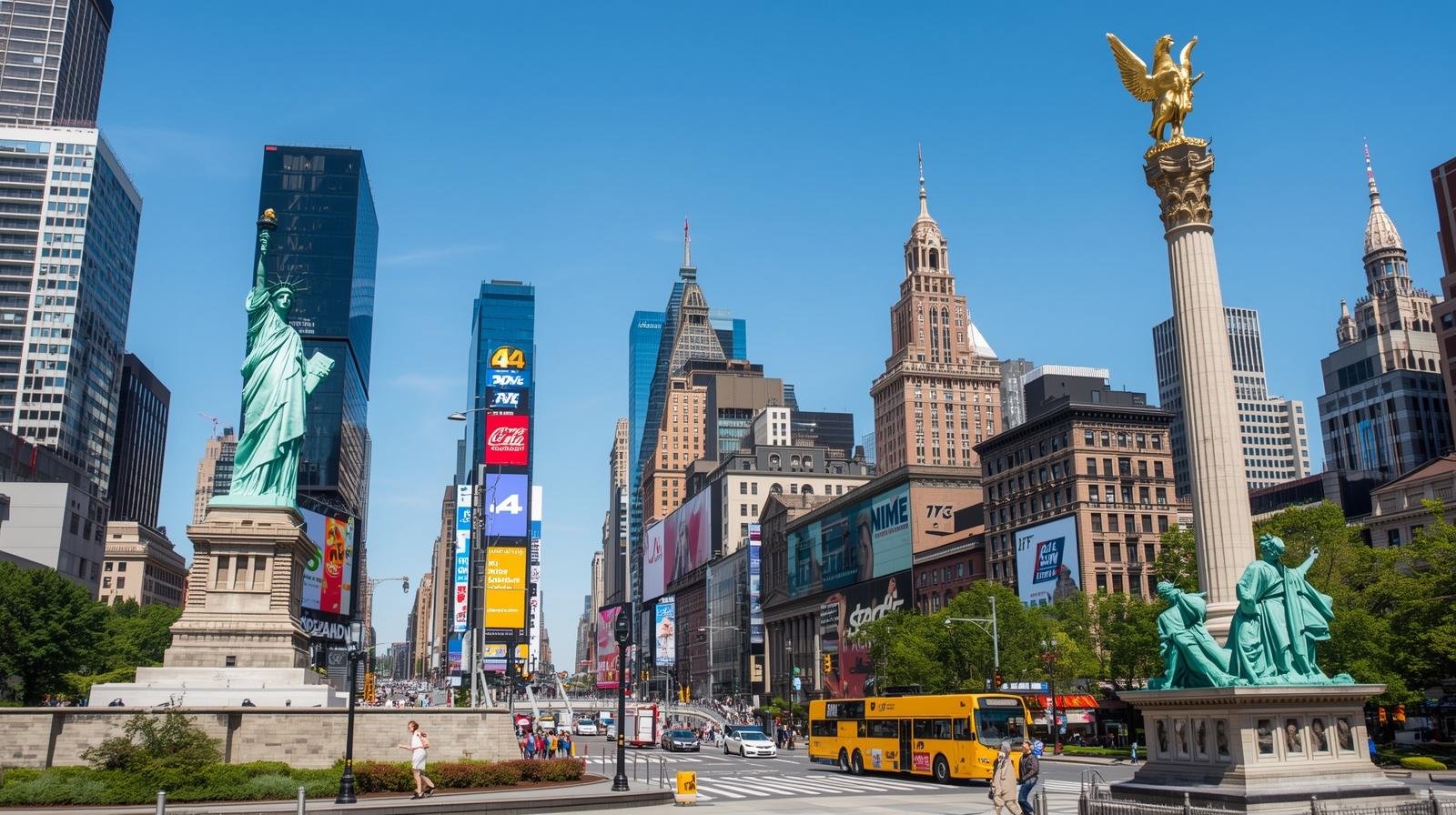
New York City can feel overwhelming the moment you step off the plane the noise, the pace, the sheer scale of it. But the best things to do in New York for first-time visitors actually fall into a manageable list: a handful of iconic landmarks, a few standout neighborhoods and a couple of skyline views that make the whole trip click into place. This guide walks through exactly what to prioritize, how to sequence your days and what locals wish every visitor knew before landing.
What Should First-Time Visitors Do in New York?
For a first visit, focus on five things: the Statue of Liberty, Central Park, Times Square, one observation deck for a skyline view and at least one neighborhood outside Midtown Brooklyn or the Lower East Side work well. Together, these cover the history, the energy, the green space and the local texture that make New York feel like more than a checklist.
The rest of this guide breaks each of these down, plus a day-by-day plan that keeps you from trying to do everything in 48 hours (a mistake almost every first-timer makes).
Start With the Icons But Do Them Right
Every first-time visitor list includes the Statue of Liberty, Times Square and Central Park and for good reason. Skipping them would be like visiting Paris and walking past the Eiffel Tower without a second look. The trick isn’t whether to see them it’s when.
Statue of Liberty & Ellis Island. Ferry tickets sell out fast, especially for pedestal or crown access, so book at least a few days ahead. A Statue of Liberty & NYC Landmarks Sightseeing Cruise is a good option if you want the view without committing to a full Ellis Island tour and pairing it with the Statue of Liberty & Ellis Island ticket gives you both the harbor views and the immigration museum in one visit.
Times Square. It’s genuinely a different place depending on the hour. Midday brings dense crowds and slow-moving foot traffic; after dark, the billboards take over and the energy shifts completely. Most visitors find early evening just as the lights come on but before the late-night crowds peak the sweet spot.
Central Park. Go in the morning if you want the park to yourself. The Mall, Bethesda Terrace, Bow Bridge and Strawberry Fields are the highlights most guides point to and they’re all walkable from each other in under an hour.
These landmarks aren’t just photo stops. Each one tells a piece of how the city became what it is today which is exactly why they’ve stayed on every “must-see” list for over a century.
Getting Around Like a Local, Not a Tourist
One of the most useful pieces of advice for first-time visitors in NYC: skip the taxis for anything longer than a few blocks. The subway runs 24 hours a day and reaches almost every corner of the five boroughs faster and cheaper than a car ever will.
- Payment: Tap in with a contactless card or phone through OMNY no need to buy a physical MetroCard anymore.
- Navigation: Download Google Maps or Citymapper before you land. Both show live subway arrival times, which matters more than you’d expect in a system this size.
- Walking: Manhattan’s grid layout (above 14th Street) makes walking directions easy to follow even without an app avenues run north-south, streets run east-west.
- Airports: The AirTrain connects JFK to the subway system directly; LaGuardia requires a bus transfer to the nearest subway station.
Most of New York’s top attractions sit within a short walk of a subway stop, so once you’re comfortable with the system, the city opens up fast.
How to Plan Your First Few Days in NYC
The single biggest mistake first-time visitors make is trying to fit everything into one or two days. New York rewards a slower pace spreading attractions across several days, grouped by neighborhood, cuts down on backtracking and lets each place actually land.
Here’s a four-day framework that groups things geographically so you’re not crossing Manhattan five times a day:
| Day | Focus | Key Stops |
| Day 1 | Midtown Highlights | High Line walk, Chelsea Market lunch, Times Square at dusk |
| Day 2 | Harbor & Skyline | Statue of Liberty ferry, One World Observatory in the afternoon |
| Day 3 | Brooklyn & Culture | Brooklyn Bridge walk, DUMBO views, evening Statue of Liberty & NYC Landmarks Cruise |
| Day 4 | Parks & Museums | American Museum of Natural History or MoMA, afternoon in Central Park |
Day 1 — Midtown Highlights
Start on the High Line, the elevated park built on a former freight rail line it’s one of the more unexpected things to do in NYC for first-timers because it feels nothing like the rest of Midtown. Grab lunch at Chelsea Market, then work your way toward Times Square for the early-evening lights.
Day 2 — Harbor & Skyline
Morning ferry out to the Statue of Liberty, then spend the afternoon at One World Observatory for a 360-degree view of the skyline from the tallest building in the Western Hemisphere. Seeing the city from above after seeing it from the water gives a much fuller sense of scale.
Day 3 — Culture & Neighborhoods
Walk the Brooklyn Bridge toward DUMBO for some of the best skyline photos in the city, then head back to Manhattan for an evening cruise that shows the skyline lit up from the water a completely different mood from the daytime harbor view.
Day 4 — Parks & Museums
The Met and the American Museum of Natural History both deserve at least half a day each trying to combine them with anything else usually means rushing both. Pair whichever one you choose with an unhurried afternoon in Central Park.
Neighborhoods Most First-Timers Skip
Most New York City guides for beginners stay locked in Midtown, which only shows one version of the city. A few neighborhoods consistently come up as the places visitors remember most after they leave:
- Brooklyn & Williamsburg — street art, independent coffee shops and some of the best skyline views in the city from the waterfront.
- Harlem — jazz clubs, soul food and a cultural history that shaped much of 20th-century American music.
- Lower East Side — old-school delis, small galleries, and a nightlife scene that feels distinctly local rather than tourist-focused.
- Greenwich Village — tree-lined streets, historic townhouses and Washington Square Park, where chess games and street musicians have been a fixture for decades.
None of these show up on the standard “top 10” list, but they’re consistently what visitors bring up when asked what surprised them most. For a full breakdown by interest — solo travel, families, couples — the complete guide to things to do in New York covers options for every kind of traveler.
The Skyline Views Worth Paying For
New York observation decks aren’t interchangeable and picking the right one depends on what kind of view you want.
| Observation Deck | Height | Best For |
| Empire State Building | 86th & 102nd floors | Classic skyline shot, includes the Chrysler Building in view |
| One World Observatory | 100th–102nd floors | Widest overall view, tallest building in the Western Hemisphere |
| Edge Observation Deck | 100th floor, Hudson Yards | Glass floor extending out over the street, dramatic photos |
| SUMMIT One Vanderbilt | 91st–93rd floors | Immersive art installations combined with skyline views |
If time and budget allow, doing two on different evenings gives you genuinely different experiences one at golden hour, one after dark, since the skyline transforms completely once the city lights come on.
Practical Tips That Save Time and Money
A few habits separate a smooth first trip from a frustrating one:
- Book timed entry in advance. Lines at the Empire State Building, One World Observatory and the Statue of Liberty ferry can easily eat up half a day if you show up without a reservation.
- Eat a block or two off Times Square. Restaurants directly on the square are priced for tourists and rarely reflect the city’s actual food scene — walk even one block and quality improves noticeably.
- Wear comfortable shoes. Most first-time visitors underestimate how much walking a single day in NYC involves, often 8–10 miles.
- Carry a portable charger. Constant map use, photos and messaging drain a phone fast, and subway platforms don’t always have signal.
- Tip 18–20% at sit-down restaurants. This isn’t optional in the U.S. the way it is in many other countries and it’s factored into how service workers are paid.
- Consider a museum or attraction pass if you’re planning to visit four or more paid sites it can meaningfully reduce per-ticket cost versus buying separately.
Key Takeaways
- The core first-timer list is short: Statue of Liberty, Central Park, Times Square, one observation deck and one neighborhood beyond Midtown.
- Spread attractions across at least 3–4 days grouped by area instead of cramming everything into 48 hours.
- Book timed entry for major attractions in advance walk-up lines are the single biggest time-waster for first-time visitors.
- The subway is faster and cheaper than taxis for almost every cross-town trip.
- Brooklyn, Harlem, the Lower East Side and Greenwich Village round out the experience beyond the standard tourist track.
- Doing two observation decks on different days (one at sunset, one at night) gives noticeably different views worth the extra ticket.
Frequently Asked Questions
What are the top things to do in New York for first-time visitors?
The Statue of Liberty, Central Park, Times Square, and at least one skyline observation deck cover the essentials. Adding a neighborhood like Brooklyn or the Lower East Side rounds out a first trip with a more local perspective.
How many days do first-time visitors need in New York City?
Four days is a comfortable minimum to cover the major landmarks without rushing. Three days works if you’re focused mainly on Manhattan, while five or more allows time for museums and outer-borough neighborhoods without feeling packed.
Is the subway safe and easy for tourists to use?
Yes. The New York City subway runs 24/7 and covers nearly every neighborhood. Tap-to-pay through OMNY has replaced the need for a physical MetroCard, and apps like Citymapper show live arrival times, which makes navigation straightforward even for first-time riders.
What should first-time visitors book in advance?
Statue of Liberty ferry tickets, observation deck entry (Empire State Building, One World Observatory, Edge, or SUMMIT One Vanderbilt), and any museum with timed entry, such as the Met. These sell out or build long walk-up lines during peak season.
What’s the best time of year to visit New York for the first time?
Late spring (April–June) and early fall (September–October) offer comfortable weather and shorter lines than the summer peak. December brings holiday lights and markets but also the year’s biggest crowds and coldest weather.
Which neighborhoods should first-time visitors see beyond Midtown?
Brooklyn (especially Williamsburg and DUMBO), Harlem, the Lower East Side, and Greenwich Village consistently stand out as the places visitors remember most after a trip, offering a different texture from the landmark-heavy Midtown core.
Plan a Trip That Doesn’t Feel Rushed
New York rewards visitors who slow down enough to notice it a quiet block off the main avenues, a subway performer mid-set, a Brooklyn rooftop at sunset. The landmarks matter, but the moments in between are usually what people talk about once they’re home.
Ready to lock in the essentials before you land? Book skip-the-line tickets for the Empire State Building, One World Observatory, and the Statue of Liberty with Jugnu Tours and spend your first trip exploring the city instead of standing in line for it.